VOYAGER 1 • FEBRUARY 14, 1990
PALE
BLUE DOT
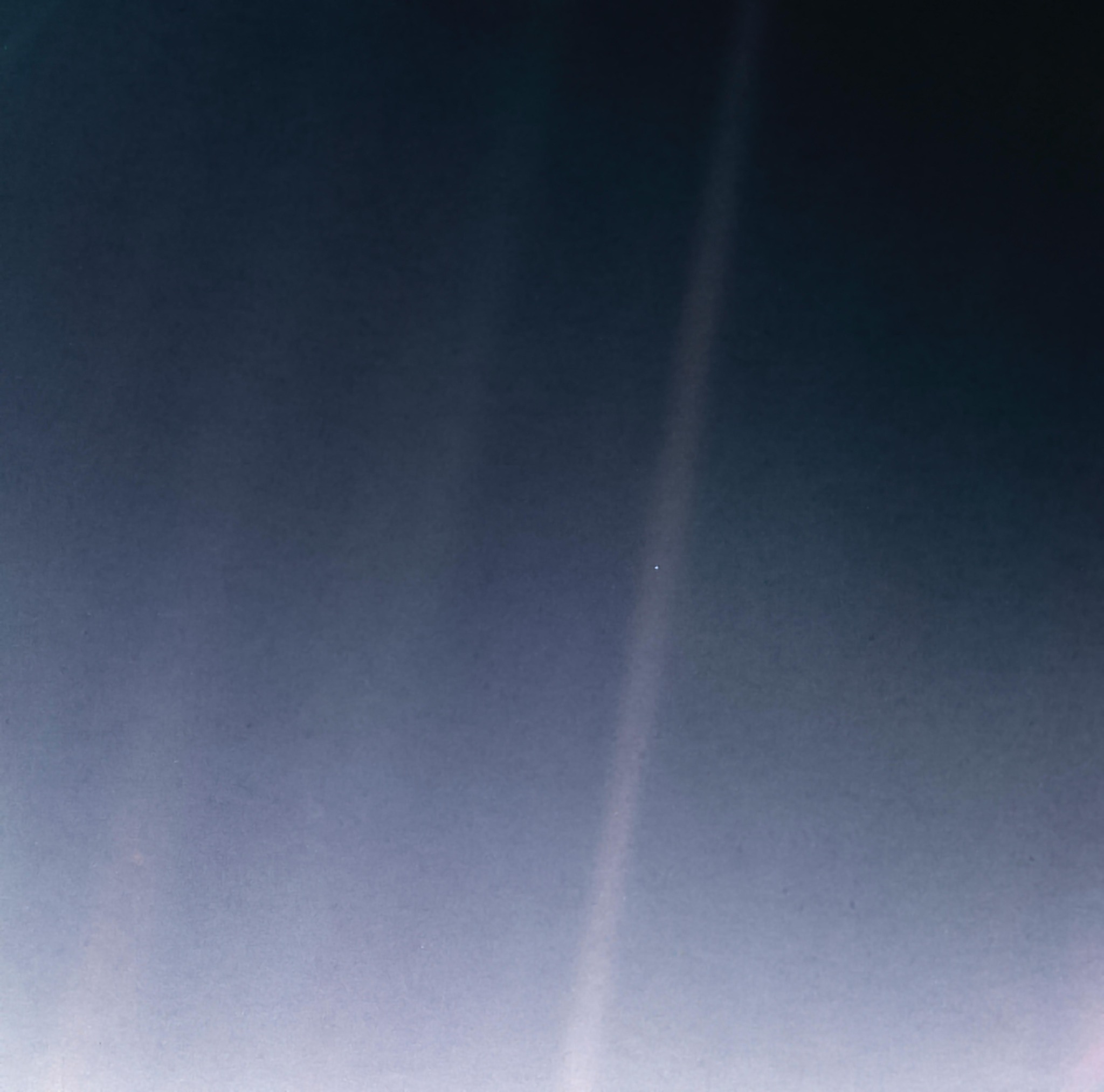
A final look back at Earth from roughly 6 billion kilometers from the Sun—and a photograph that changed our sense of scale.
01 • THE IMAGE
Earth became
a point of light.
Voyager 1 was already racing outward beyond Neptune when mission controllers commanded it to turn its cameras back toward the inner Solar System one last time.
Earth appears inside scattered sunlight, so small that the familiar world is reduced to a tiny speck against deep space.
02 • THE FAMILY PORTRAIT
The Solar System,
seen from the outside.
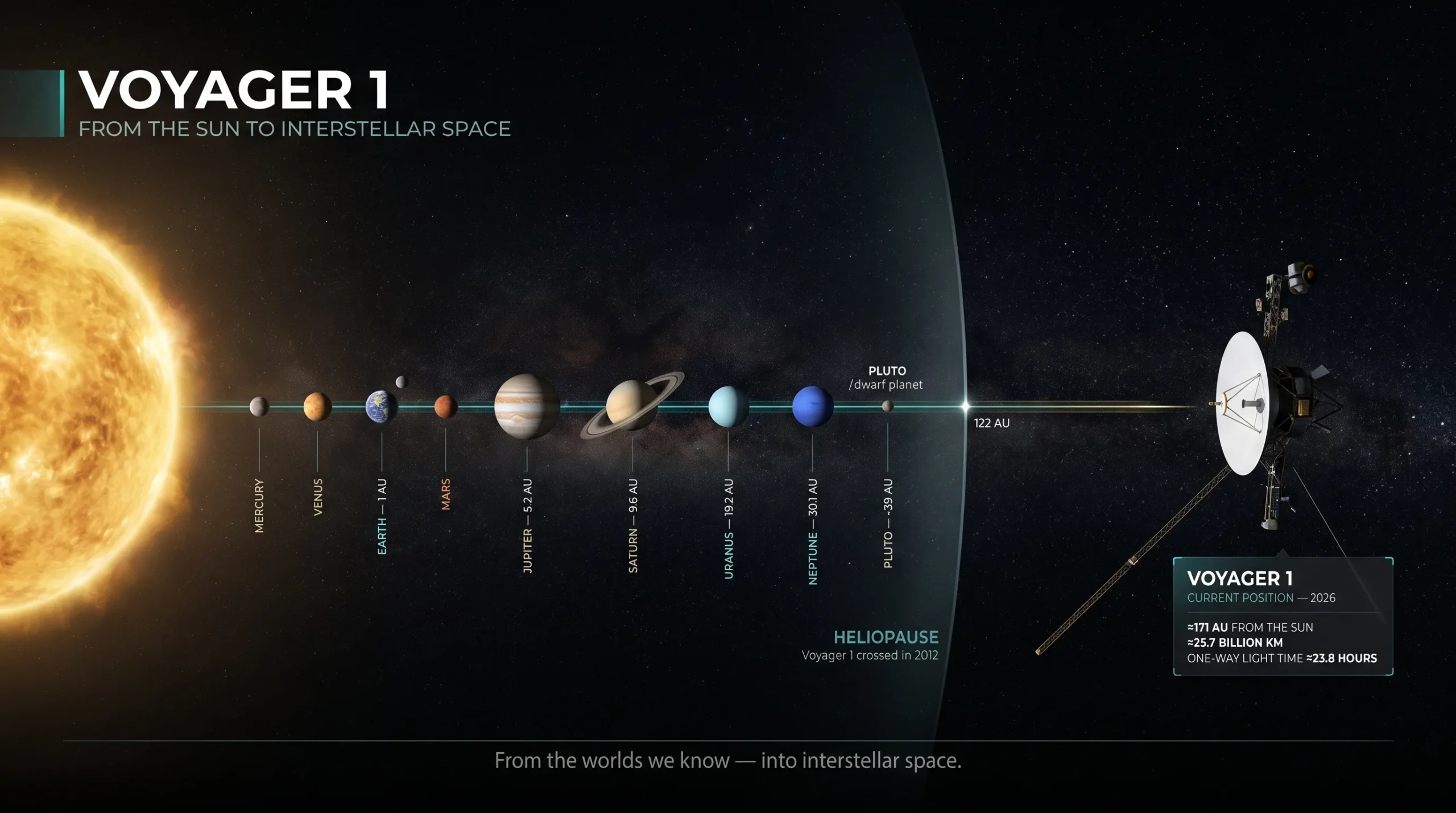
The Pale Blue Dot belonged to a larger sequence of 60 images used to create the first “family portrait” of our Solar System. Voyager 1 captured six planets and the Sun before the camera system was shut down.
03 • THE FINAL LOOK
Thirty-four minutes
before silence.
NASA records that the Earth images were taken at 04:48 GMT. At 05:22 GMT, Voyager 1 powered off its cameras forever, conserving energy for the mission ahead.
The spacecraft stopped taking pictures—but it did not stop exploring.
04 • PERSPECTIVE
“That’s here.
That’s home.
That’s us.”
Carl Sagan’s reflection gave the image an enduring cultural life. HABIB.AT uses the photograph as a reminder that scientific distance can create a profoundly human perspective.
05 • AFTER THE PHOTOGRAPH
The journey
continued outward.
Voyager 1 continued through the outer reaches of the heliosphere and crossed the heliopause in August 2012, becoming the first spacecraft to enter interstellar space.
The camera story ended in 1990. The science mission did not.